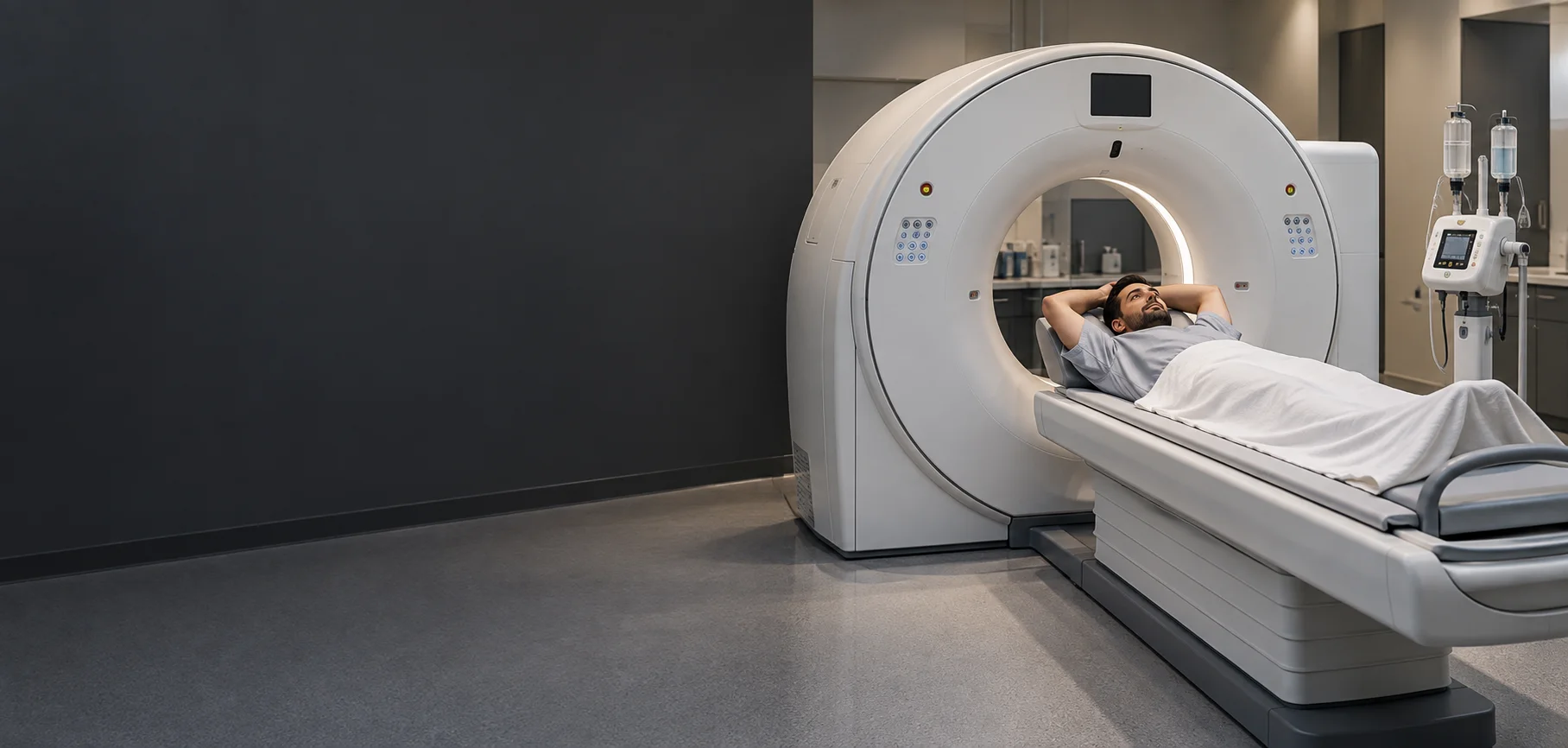
Bone in finest detail
Thin-slice cross-sections show fractures, bone spurs, facet joints and the exact shape of nerve exits better than any other study.
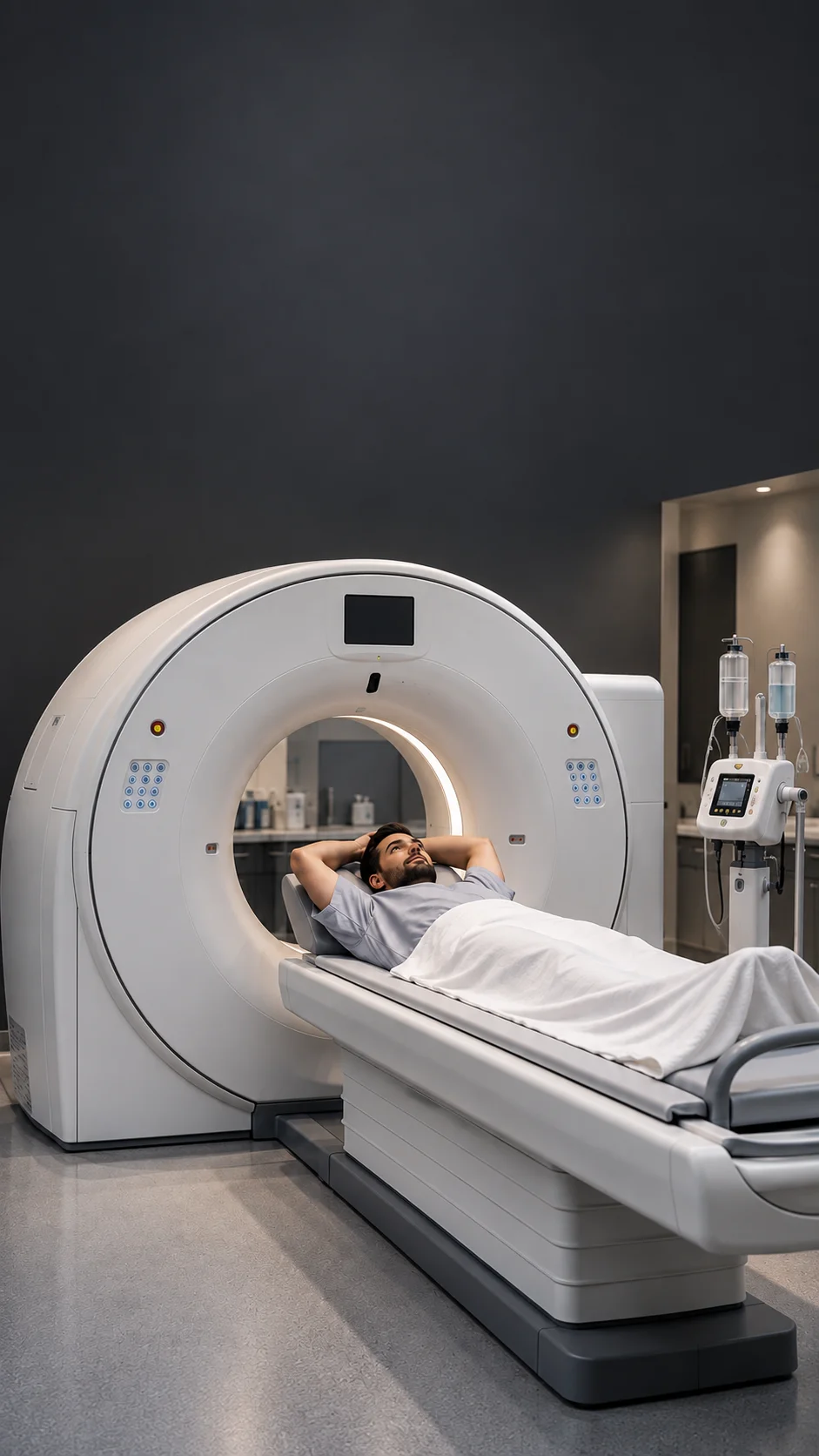
Diagnostics · Standard
Computed tomography, with or without contrast dye, giving detailed cross-sectional images of bone and surrounding structures.
What it is
Thin-slice cross-sections show fractures, bone spurs, facet joints and the exact shape of nerve exits better than any other study.
After surgery, CT confirms whether bone is bridging into solid fusion and whether implants sit exactly as planned.
Iodine-based dye highlights blood vessels, inflammation and tumours — structures plain CT renders only faintly.
Comparing non-contrast and contrast series separates permanent anatomy from enhancing pathology, sharpening the diagnosis.
Common questions
The plain series maps bone; the contrast series reveals what lights up with blood flow. Together they distinguish, for example, scar from recurrent disc or infection from degeneration.
Contrast allergy, kidney disease, diabetes medication and thyroid conditions all matter. Bring a full medication list so the team can plan safely.
CT uses more radiation than a plain X-ray, so it is ordered only when the bone detail genuinely changes the plan — and the protocol is kept as low as reasonably achievable.
Follow the instructions you are given — contrast studies sometimes require fasting and a driver is unnecessary, but confirm both beforehand.
Free · No obligation · Reviewed by the ProSpine team