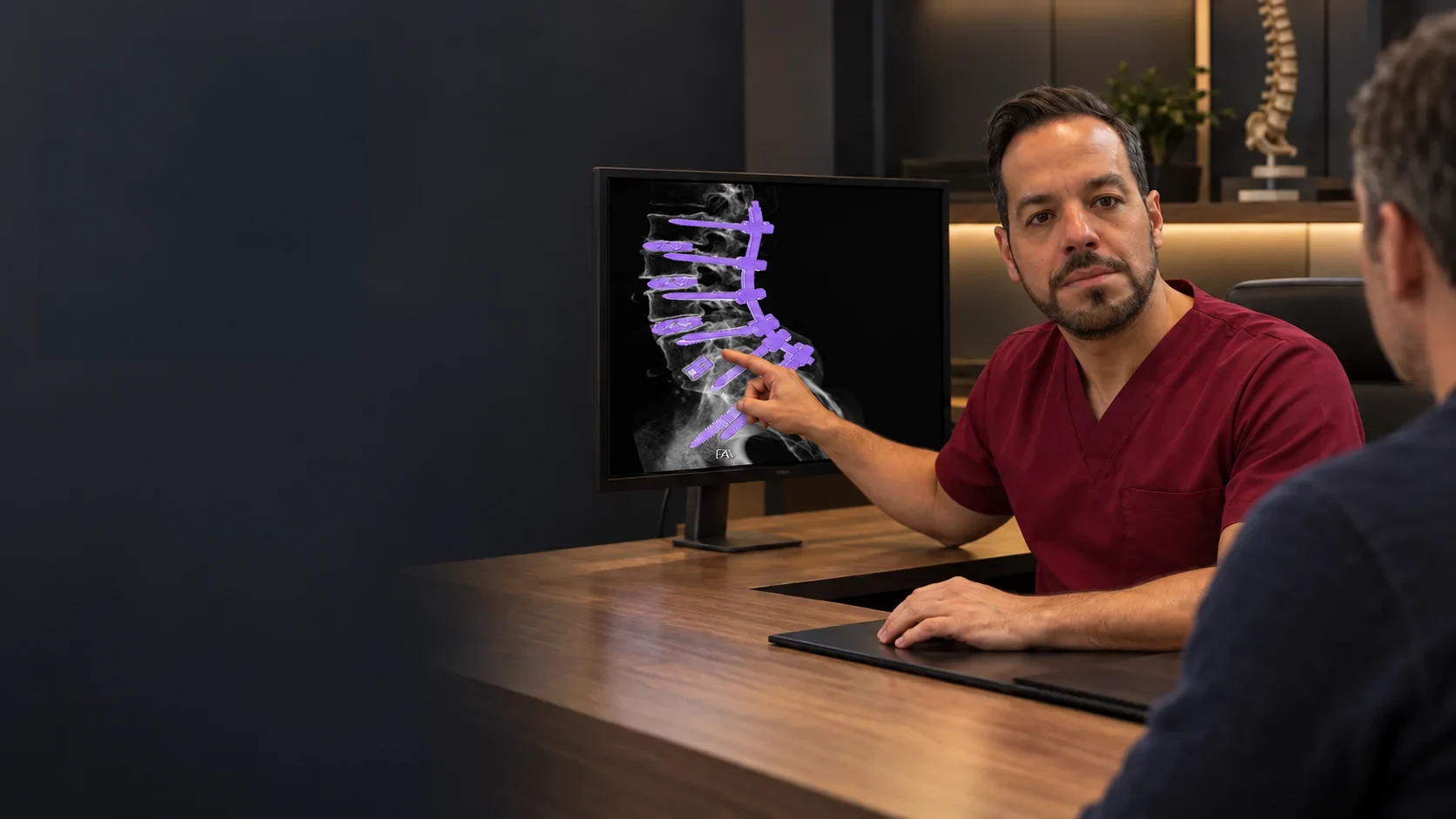
Failed prior surgery
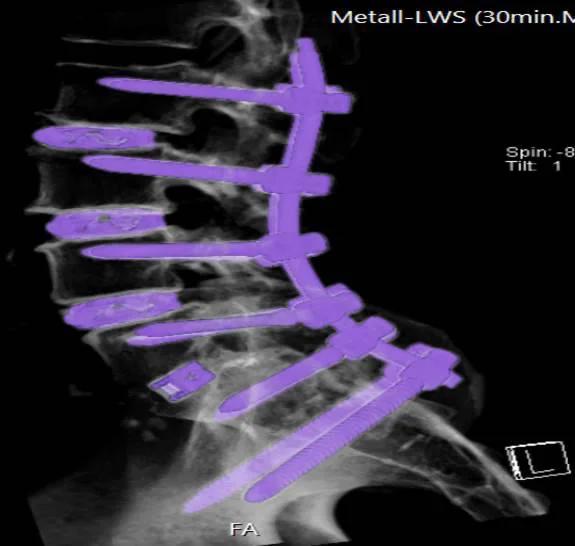
Non-union, adjacent-segment disease, misplaced hardware or persistent compression — each failure mode demands its own salvage plan.
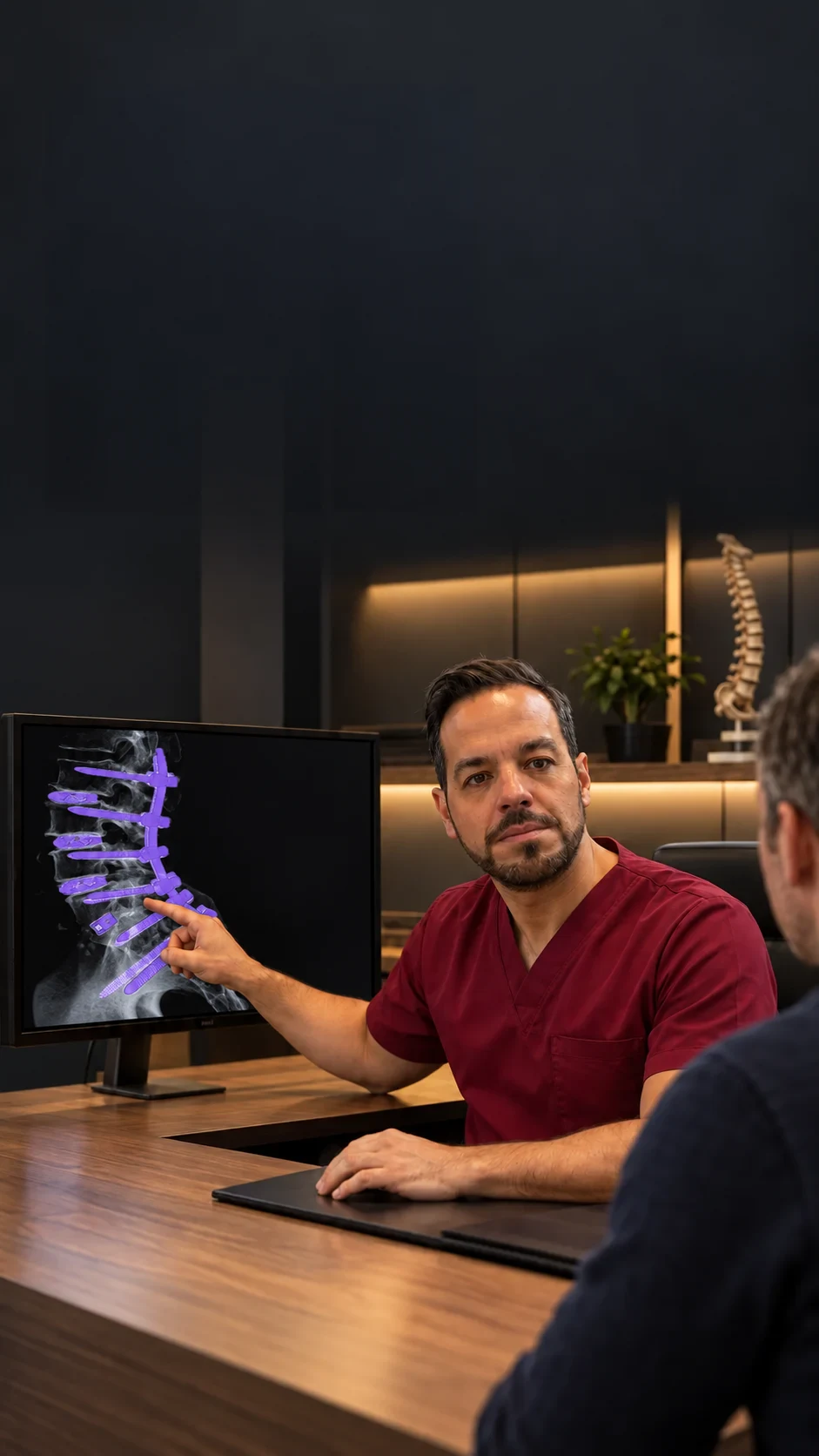
Treatments · Complex Spine Surgery
Surgery for previously operated spines, failed constructs and complex multi-level conditions.
What it is
Non-union, adjacent-segment disease, misplaced hardware or persistent compression — each failure mode demands its own salvage plan.
Loosened, worn or wrongly indicated implants can be removed and the segment reconstructed, most often toward stability.
Several sick levels interacting need one coherent strategy — not a sequence of isolated operations.
Revision anatomy is scarred, fragile and unforgiving. Case volume in this exact territory is the strongest predictor of a good result.
What to expect
Old notes, every prior image and the current failure are reconstructed in detail before anything is proposed.
Removal, reconstruction and protection of neighbouring levels are designed as a single operation wherever safely possible.
Healing scarred tissue is slower and watched more closely. Report fever, wound changes, worsening pain or new neurology promptly.
Common questions
Honestly, yes — scar tissue, altered anatomy and weaker bone raise the stakes, which is exactly why case selection and planning are stricter.
Often. Options range from revising the fusion mass to extending it or converting levels to motion preservation above and below — the failure mode decides.
A fresh assessment sometimes disagrees — new imaging, a different reading of the failure, or techniques unavailable at the time. A second opinion costs nothing.
By naming why the last attempt failed and designing specifically against it, rather than repeating the same operation louder.
Free · No obligation · Reviewed by the ProSpine team