Fracture pain
A cracked vertebra from osteoporosis or minor trauma can hurt severely with movement. Stabilising it addresses the pain at its source.
Treatments · Percutaneous Spine Procedures
Minimally invasive cement-based stabilisation for vertebral fractures.
What it is
A cracked vertebra from osteoporosis or minor trauma can hurt severely with movement. Stabilising it addresses the pain at its source.
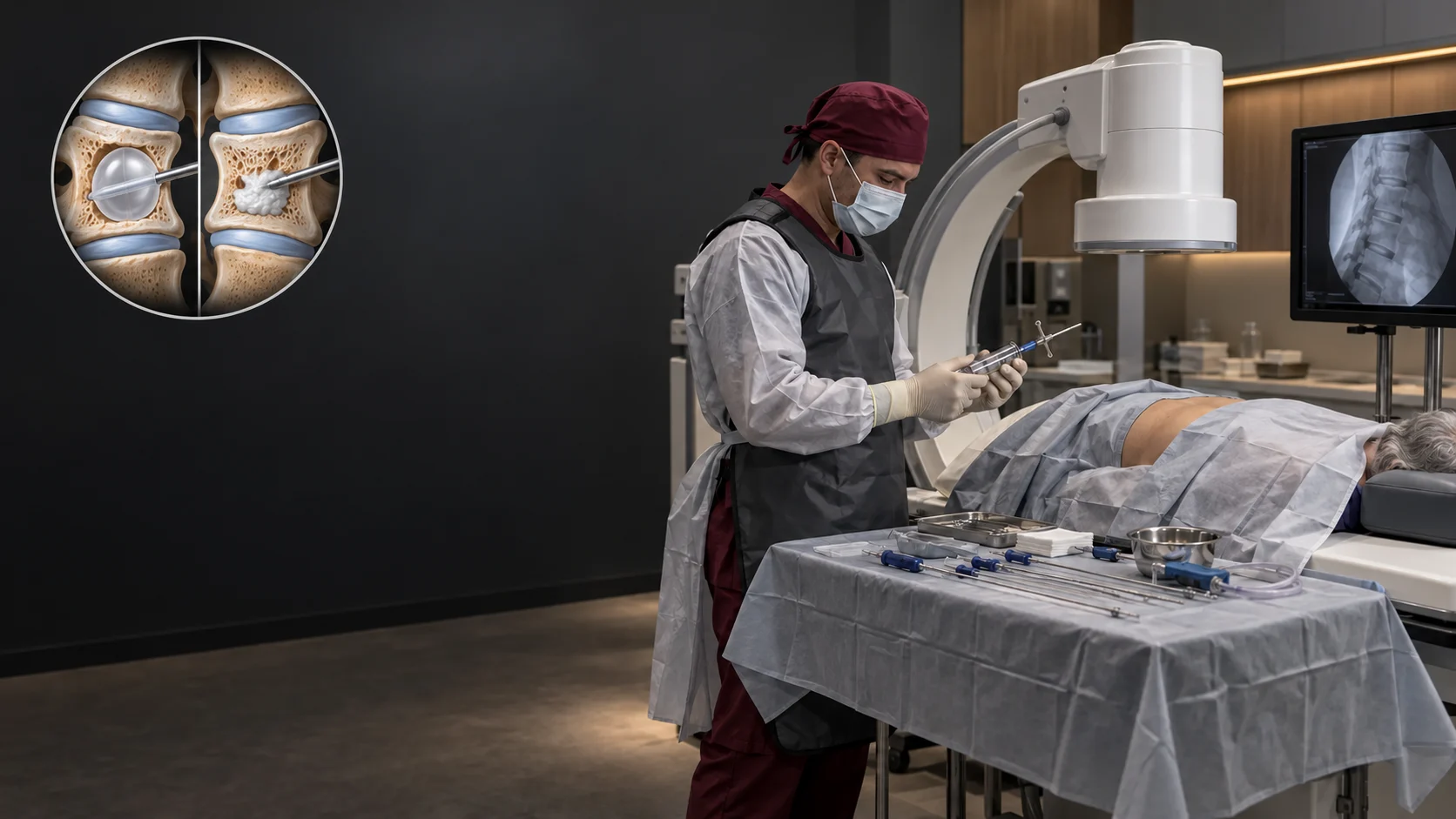
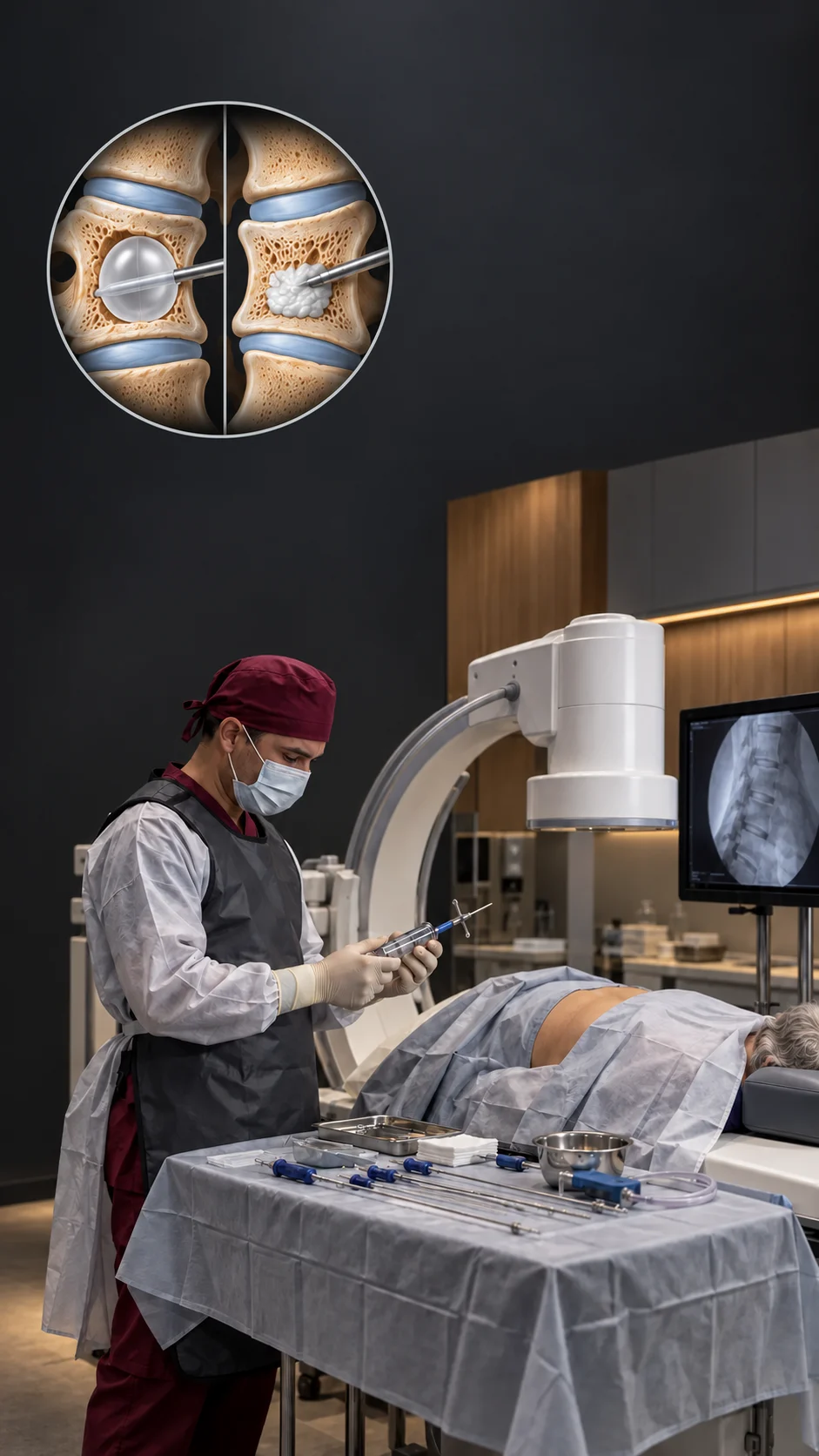
Medical-grade bone cement injected into the vertebra hardens there, internally splinting the fracture.
Where the vertebra has collapsed, a small balloon first restores some height before the cement is placed.
Both are performed through needles under imaging guidance — no open surgery, no hardware.
What to expect
Needles enter the fractured vertebra through small skin punctures under continuous X-ray guidance.
In kyphoplasty a balloon gently re-expands the bone and is removed; cement then fills the space. Vertebroplasty places cement directly.
Brief observation, then movement as advised. Report fever, worsening pain or new neurology promptly — and bone health is assessed alongside.
Common questions
It depends on the fracture: degree of collapse, age and shape decide whether height restoration adds value. Your surgeon explains the recommendation.
Fracture pain often improves substantially once the vertebra is stabilised. The underlying bone fragility still needs its own assessment and care.
Cement leakage outside the vertebra is the specific concern and the reason for meticulous imaging control; infection and bleeding are uncommon.
One fragility fracture raises the question for the rest of the spine — which is why bone density assessment and bone health care accompany treatment.
Free · No obligation · Reviewed by the ProSpine team