
Treatments · Nerve Relief
Spinal Decompression
Precise nerve decompression techniques to relieve radicular pain and restore function through minimally invasive approaches.
- Minimally invasive
- Outpatient techniques
- Rapid radicular relief
- Stability preserved
Purpose & benefits
Targeted nerve relief
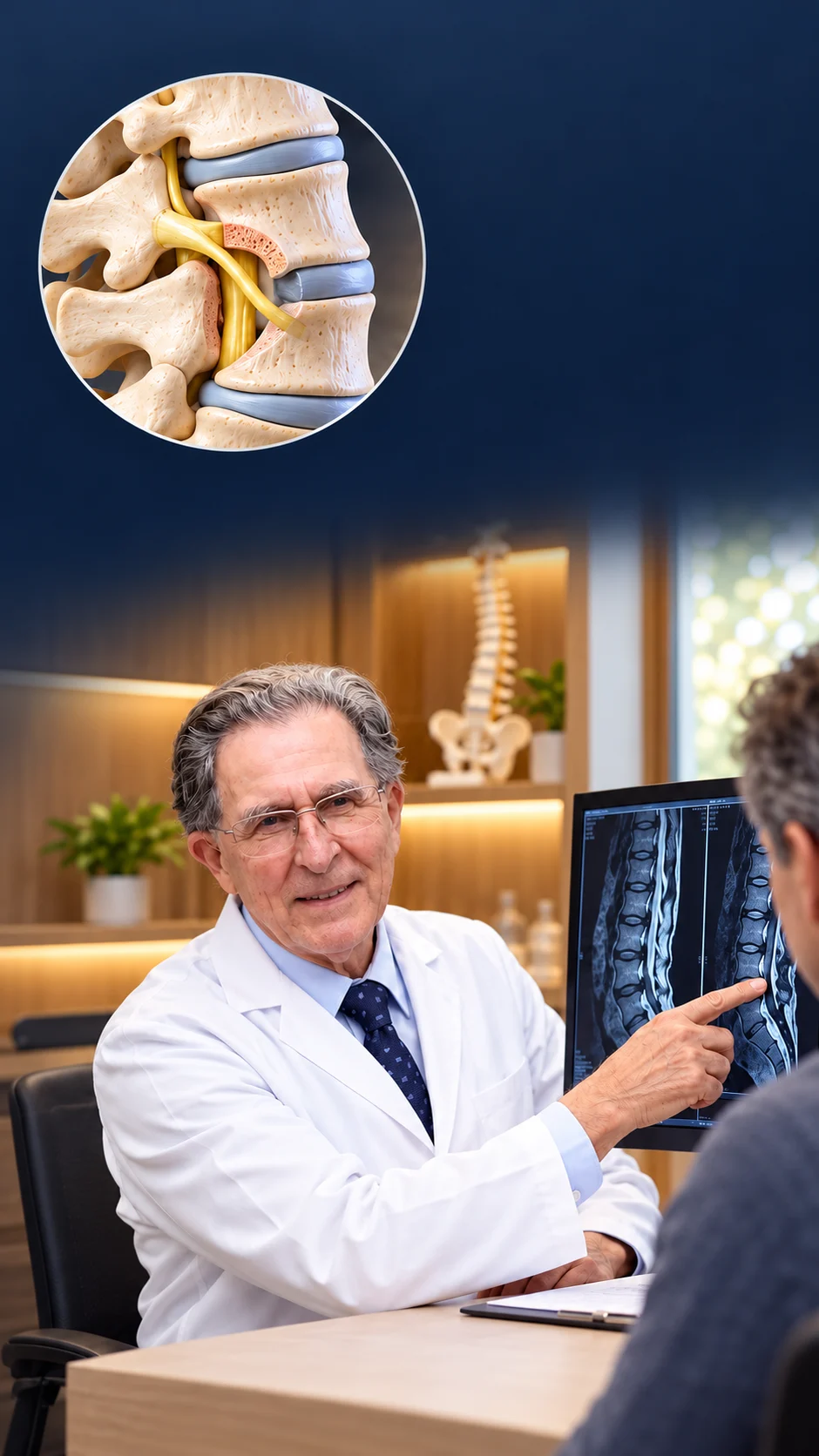
Decompression procedures relieve pressure on nerves or the spinal cord by removing structures that narrow the canal or foramina — disc fragments, ligament thickening, osteophytes. Common techniques include microdiscectomy, foraminotomy, and interlaminar decompression.
This targeted approach addresses the source of nerve compression while preserving spinal stability whenever possible, enabling faster recovery and return to activities.
ProSpine uses microscopic and endoscopic techniques for decompression, working under magnification through small accesses.
Decompression is subtractive surgery: nothing is implanted. Red marks the compressive tissue that comes out.
Nerve Relief
Relieve nerve compression and radicular pain
Function Restore
Restore neurological function
Preserve Stability
Preserve spinal stability when possible
Minimal Invasion
Minimize surgical invasiveness
Frequently asked questions
Questions patients ask us
How soon will my leg pain go away?
Radicular pain — the pain, numbness or weakness running down the leg or arm — often improves within days, because the pressure causing it is removed during the operation. Back pain and stamina take longer. Most patients return to desk work between two and six weeks, and to sport or physical work between six and twelve.
Will decompression fix my back pain too?
Not necessarily, and this is the most important expectation to set honestly. Decompression treats compression of the nerve. Where a significant part of your pain is axial — coming from the disc itself rather than the trapped nerve — decompression alone may not address it. That is why an axial pain component appears under considerations above, and why your imaging and symptoms are matched carefully before surgery is recommended.
Does removing bone or ligament make my spine unstable?
It can, if too much is taken. The whole technique is built around removing only what is compressing the nerve while leaving the facet joints and stabilizing structures intact — which is why the work is done under magnification. Where the compression cannot be relieved without removing enough to destabilize the segment, decompression is combined with motion preserving techniques or fusion rather than performed alone.
Is this an outpatient procedure?
Often, yes — foraminotomy in particular is commonly performed as a day case. The approach is minimally invasive and early mobilization is encouraged, with walking on the same day. Your specific plan depends on the technique, the number of levels and your general health.
I have already tried physiotherapy and injections. Does that count against me?
The opposite. Persistent symptoms despite conservative care is one of the ideal indications for decompression, because it confirms the problem is structural rather than something that will settle on its own. Send your imaging and we will tell you whether the compression we can see matches the symptoms you describe.
Your next step
Experiencing Nerve Pain?
Schedule a consultation to determine if targeted decompression can provide the relief you need.
No obligation · Reviewed by the ProSpine team