
Alignment is function
A balanced spine distributes load evenly; a deformed one overloads joints, muscles and nerves — correction restores mechanics, not just appearance.

Treatments · Complex Spine Surgery
Individually planned correction of spinal curvature and imbalance in children and adults.
What it is
A balanced spine distributes load evenly; a deformed one overloads joints, muscles and nerves — correction restores mechanics, not just appearance.
Standing full-spine films map every curve and compensation, so the plan corrects structure rather than chasing symptoms.
Only the levels that must be included are fused — preserving motion everywhere the deformity allows.
Growing spines and stiff adult deformities follow different rules; the strategy matches the age and flexibility of the curve.
What to expect
Curves are measured, flexibility assessed, and the correction simulated before any date is set.
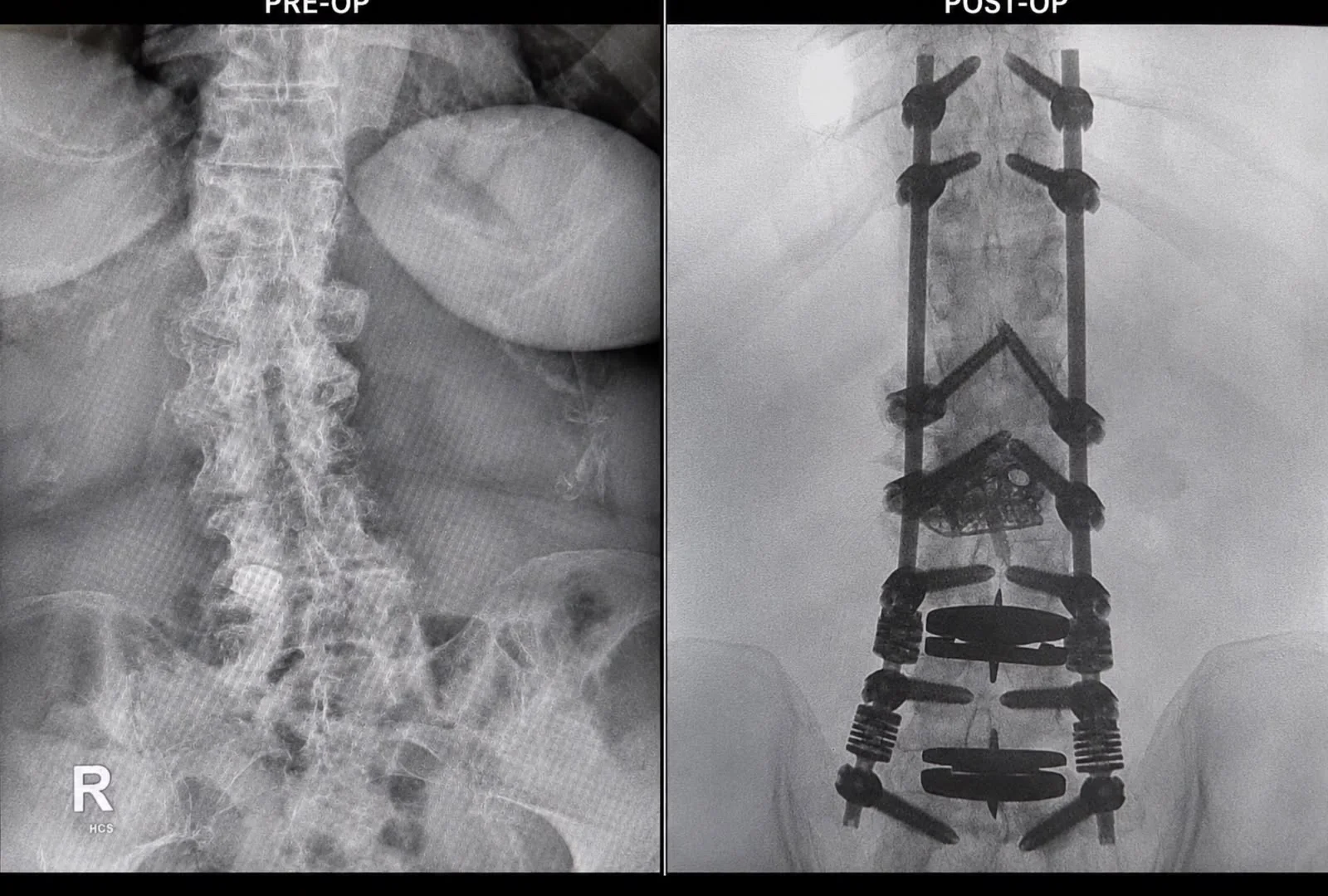
Screws, rods and releases reshape the column toward the planned alignment under continuous monitoring.
Bracing, physiotherapy and staged mobilisation follow a plan set to your correction. Report fever, worsening pain or new neurology promptly.
Common questions
No. Most curves are observed or braced; surgery is reserved for progressive, painful or functionally limiting deformity — the assessment says which you have.
The goal is a balanced, functional spine — not geometric perfection. Over-correction carries its own risks, and the plan targets balance.
Neurological monitoring runs throughout because the cord is at stake; infection, hardware issues and incomplete correction are discussed openly beforehand.
Adult curves are stiffer, often arthritic and frequently painful — correction prioritises pain relief and balance over maximal straightening.
Free · No obligation · Reviewed by the ProSpine team