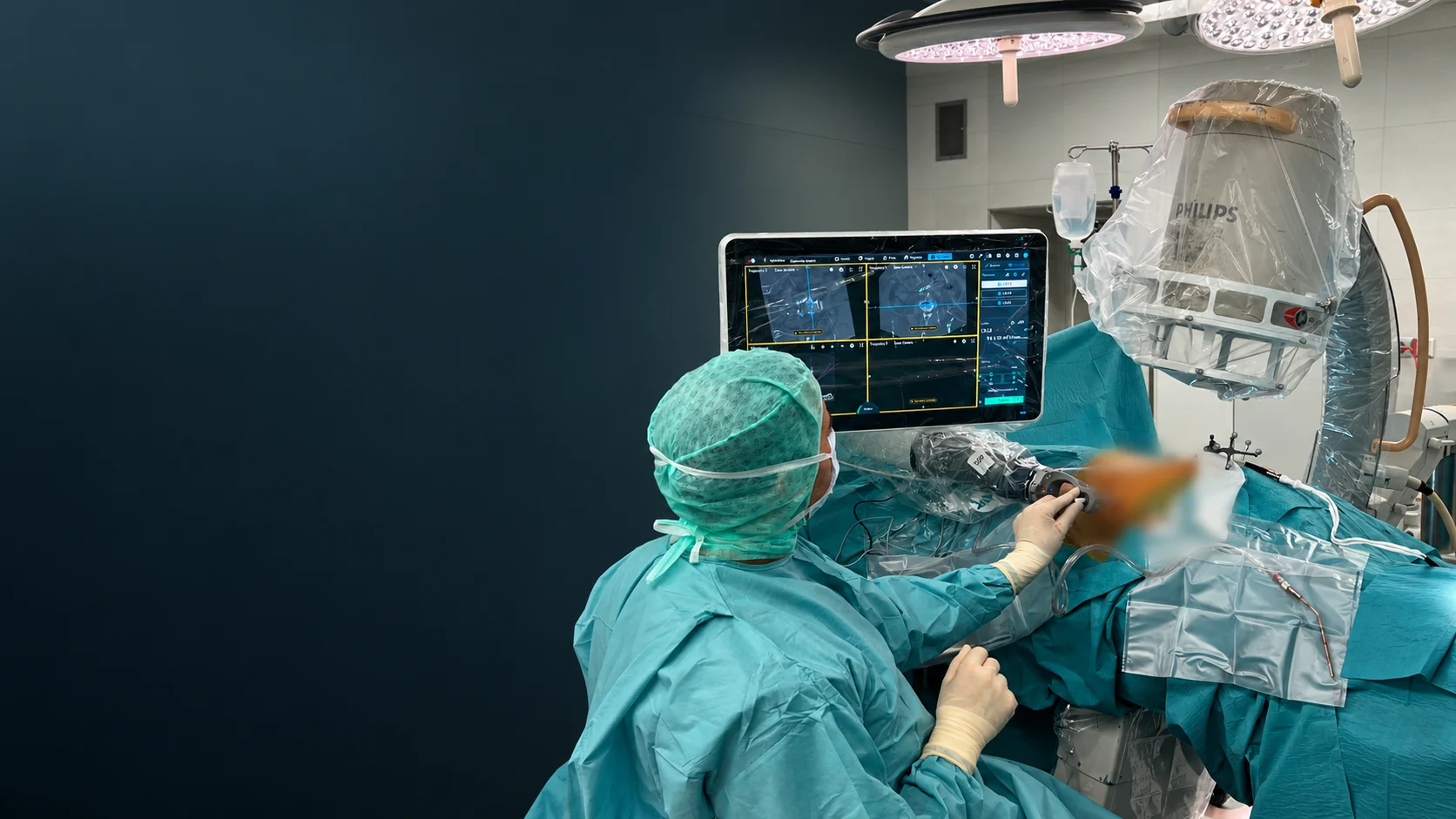
Planned to your anatomy
Every trajectory is mapped from your own imaging before the first incision — not improvised mid-operation.
Treatments
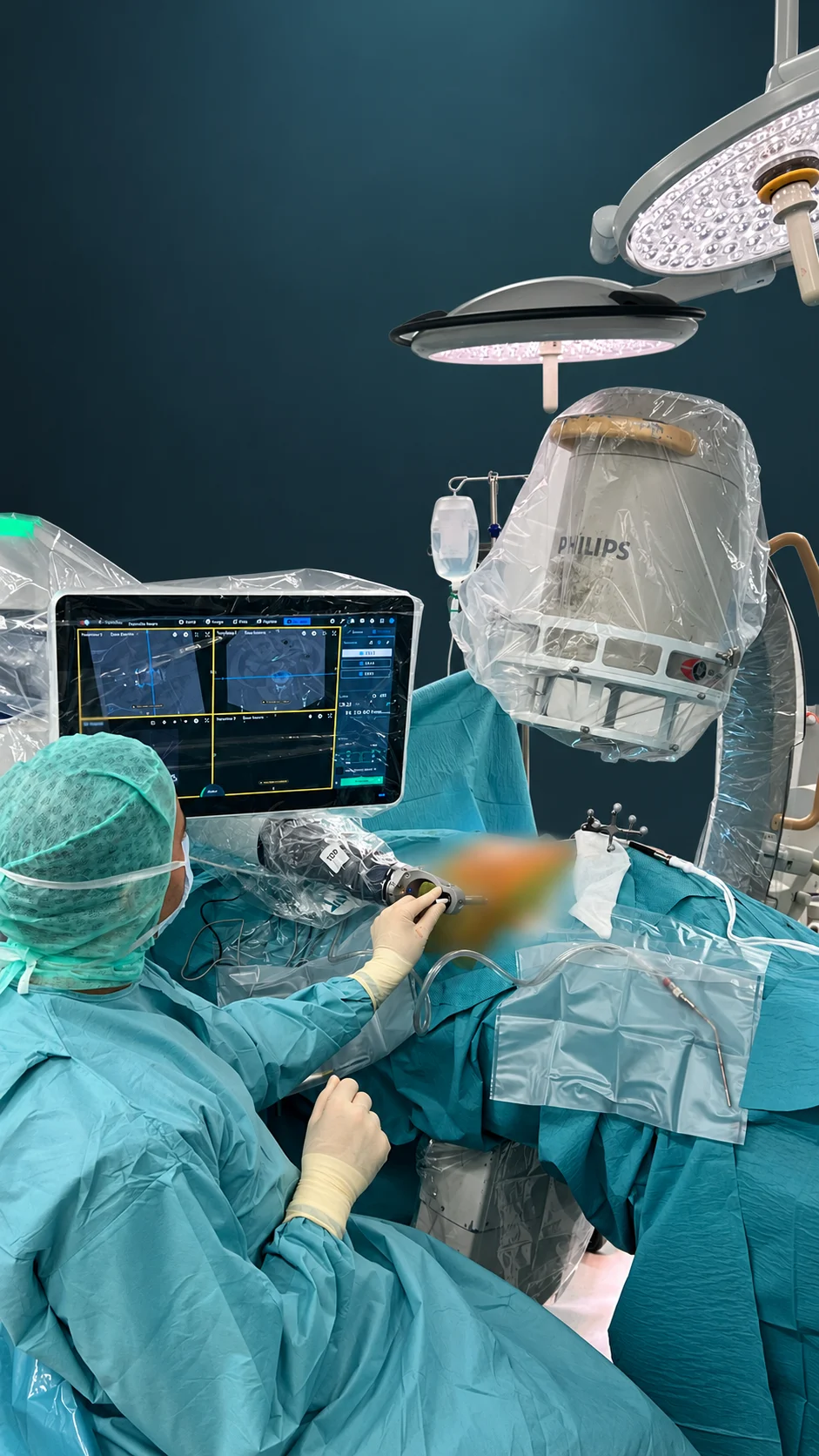
Robotic guidance supporting precise, individualised instrument placement — with the surgeon in control at every step.
What it is
Every trajectory is mapped from your own imaging before the first incision — not improvised mid-operation.
The robotic arm holds the planned path while the surgeon operates through it, reducing deviation at critical moments.
Precision placement allows narrower accesses, sparing muscle and soft tissue around the spine.
Our team brings experience from more than 1,000 robotic-assisted procedures — technology amplifies judgement, it does not replace it.
What to expect
Your imaging is loaded into the planning software and each instrument path is defined and reviewed.
Under anaesthesia, the system aligns to your anatomy and the surgeon performs each step through the guided path, verifying continuously.
Recovery follows the procedure performed — the robot changes how precisely it is done, not the healing afterwards. Report fever, worsening pain or new neurology promptly.
Common questions
No. The surgeon plans every path and performs every step; the system provides guidance and steadiness, and the surgeon remains in control throughout.
It improves placement precision, which matters most where millimetres count — around nerves and the spinal cord. Overall safety still rests on selection, planning and surgical skill.
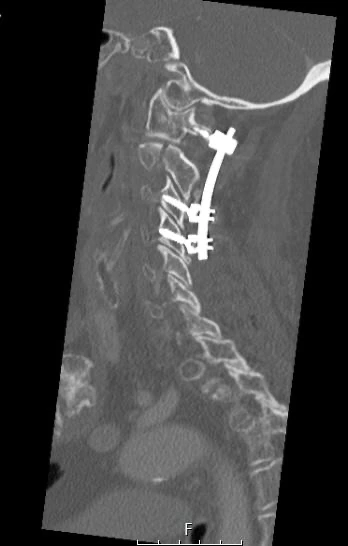
Primarily instrumented procedures where screw and cage placement define the result. Your surgeon explains whether guidance adds value in your case.
Planning adds preparation; execution is typically efficient. Any cost implications are quoted transparently before you decide.
Free · No obligation · Reviewed by the ProSpine team