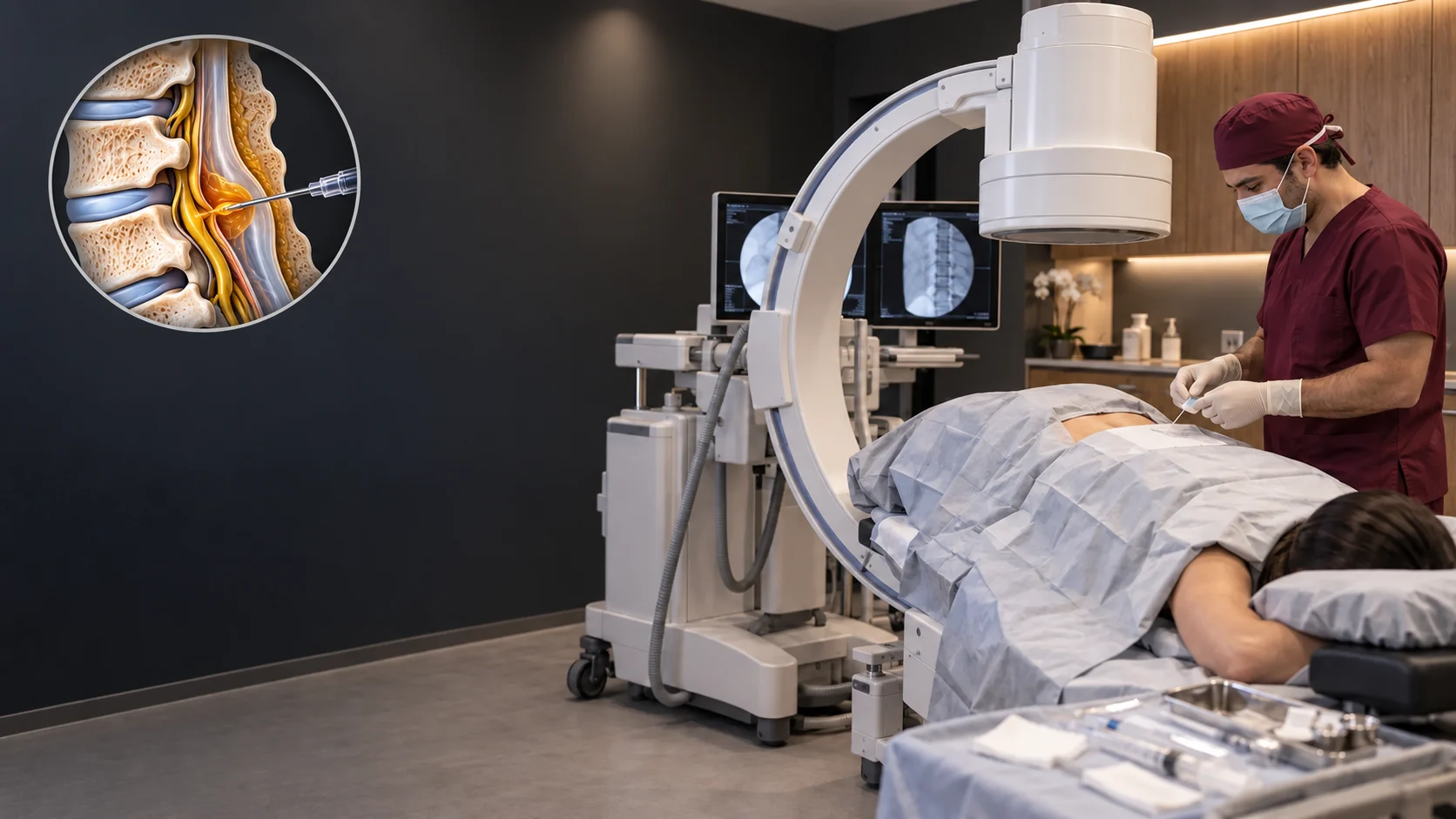
Calming nerve inflammation
Corticosteroid medication bathes the irritated nerve roots in the epidural space, reducing the swelling that drives radiating pain.
Treatments · Interventional Pain Management
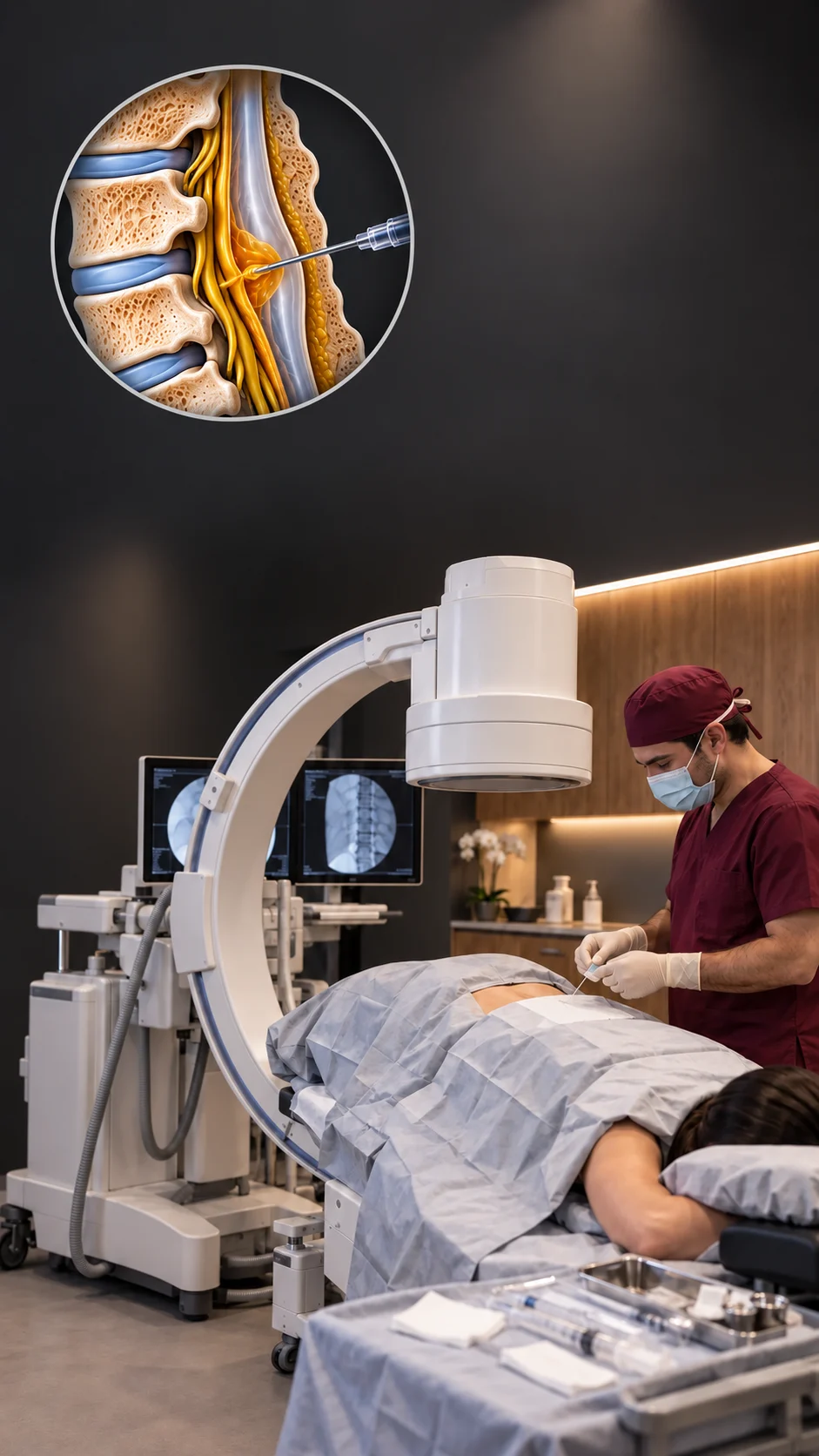
Injections into the epidural space around the spinal nerves, used within interventional pain management.
What it is
Corticosteroid medication bathes the irritated nerve roots in the epidural space, reducing the swelling that drives radiating pain.
Most effective where a herniated disc or stenosis inflames specific roots — leg-dominant or arm-dominant pain rather than pure backache.
Reduced nerve pain lets physiotherapy and normal movement resume — which is where lasting benefit is built.
Many inflamed nerves settle with targeted anti-inflammatory treatment, avoiding or deferring an operation.
What to expect
Interlaminar, transforaminal or caudal paths reach the same epidural space; the approach is chosen by level and target, always under imaging guidance.
Anaesthetic gives immediate feedback; the steroid component builds over the days that follow. A brief flare first is common.
Rest briefly, arrange a driver, and report fever, worsening pain, new weakness or bladder changes promptly.
Common questions
It varies — from weeks to many months, and occasionally longer. Relief that enables rehab counts as success even when it is temporary.
As few as achieve the goal. Steroid exposure is deliberately limited, so your surgeon spaces treatments and stops when they no longer add benefit.
Brief soreness, flushing and blood-sugar rises are commonest. Headache from dural puncture, infection, bleeding and nerve injury are uncommon; blood thinners, diabetes and allergies are reviewed beforehand.
Not necessarily. Nerves that settle with injections often stay settled — and if they do not, the response pattern sharpens any surgical plan.
Free · No obligation · Reviewed by the ProSpine team