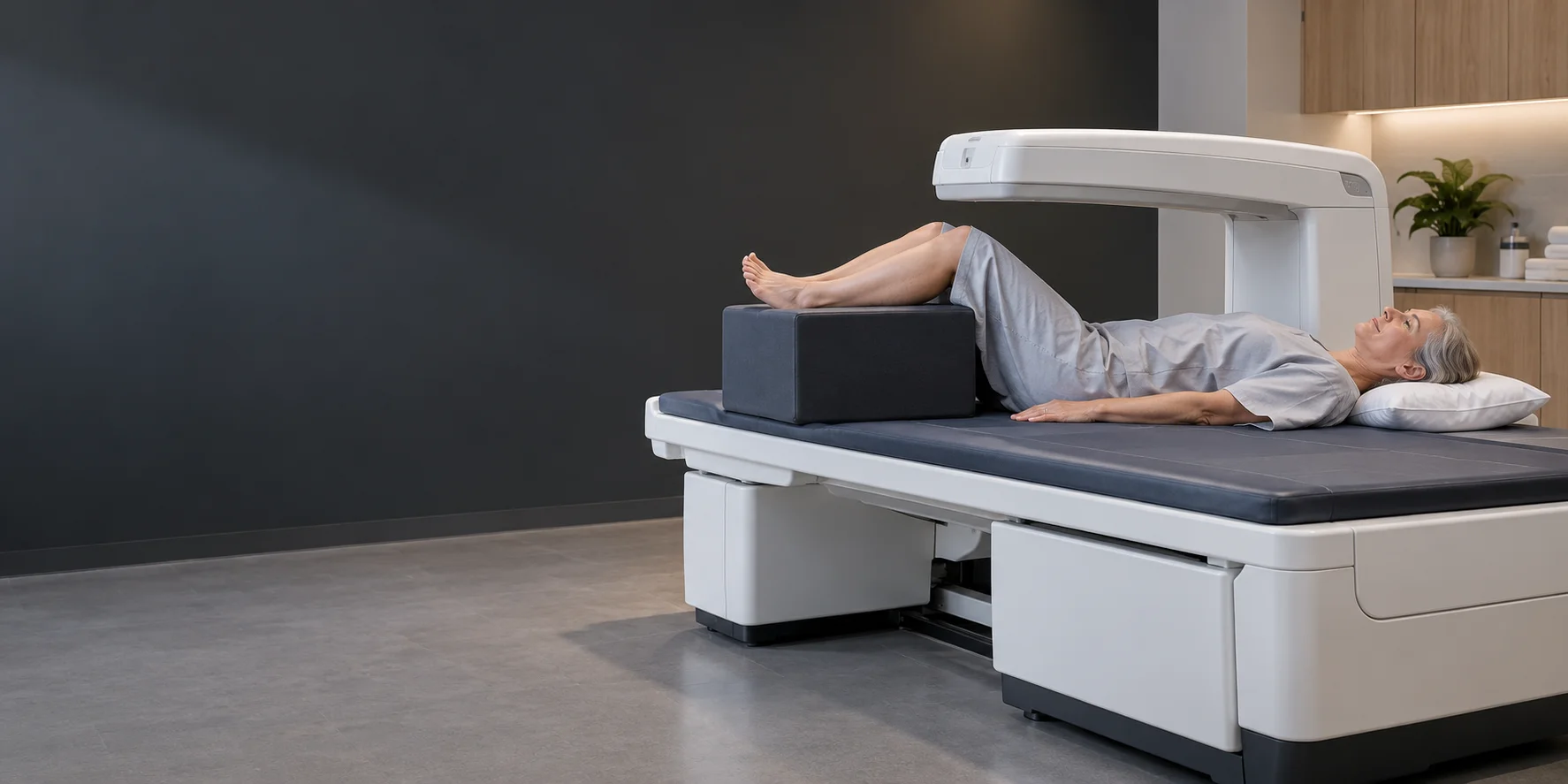
Bone mineral density
A thin, low-dose X-ray beam measures how much mineral each square centimetre of spine and hip bone contains — the standard definition of bone strength.
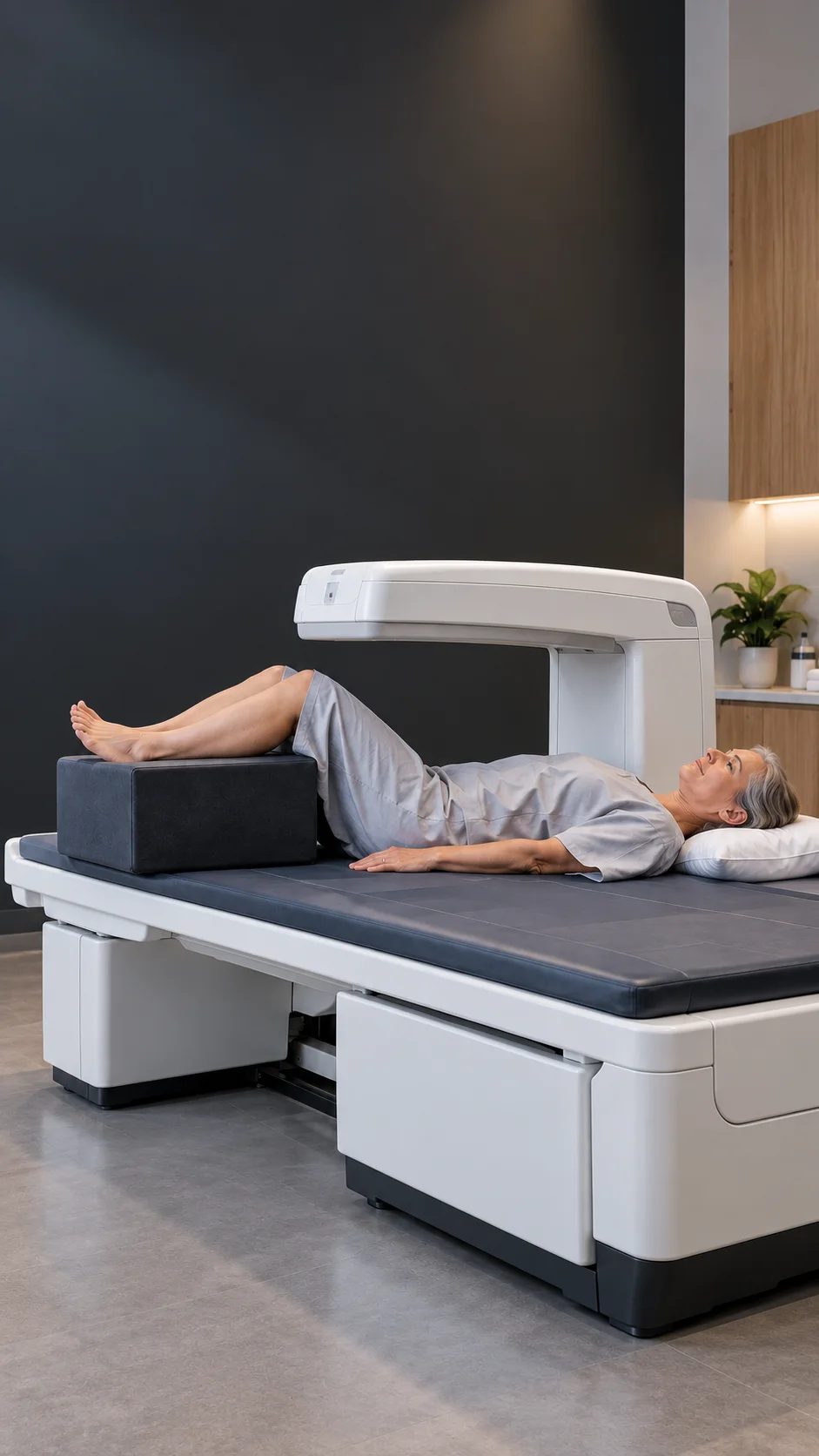
Diagnostics · Standard
A low-dose X-ray measurement of bone mineral density, used to assess bone strength before treatment decisions.
What it is
A thin, low-dose X-ray beam measures how much mineral each square centimetre of spine and hip bone contains — the standard definition of bone strength.
Results are reported against a young-healthy reference and against peers of your age, determining whether bone is normal, low, or osteoporotic.
Age, weight, prior fractures, family history and habits such as smoking feed into the overall fracture-risk picture alongside the scan.
The same machine can add a low-dose spine screen for silent vertebral fractures — common, painful, and often previously unnoticed.
Common questions
Typically post-menopausal women, long-term steroid users, anyone with a prior fragility fracture, and patients whose conditions or medications weaken bone — your physician decides if it changes management.
Implants need strong bone to sit against, and fusions need bone that heals. Low density can redirect the entire treatment plan — discovering it beforehand protects you.
Avoid calcium supplements beforehand, wear metal-free clothing, and mention recent barium, contrast or nuclear-medicine studies. Tell the team if you are pregnant.
Only when a new result would change treatment — for example to judge whether bone therapy is working. Repeat scans are compared on the same machine.
Free · No obligation · Reviewed by the ProSpine team