
Discs in detail
Healthy discs appear bright and tall; worn discs darken, flatten or bulge. The scan shows exactly which levels are degenerated.
Diagnostics · Standard
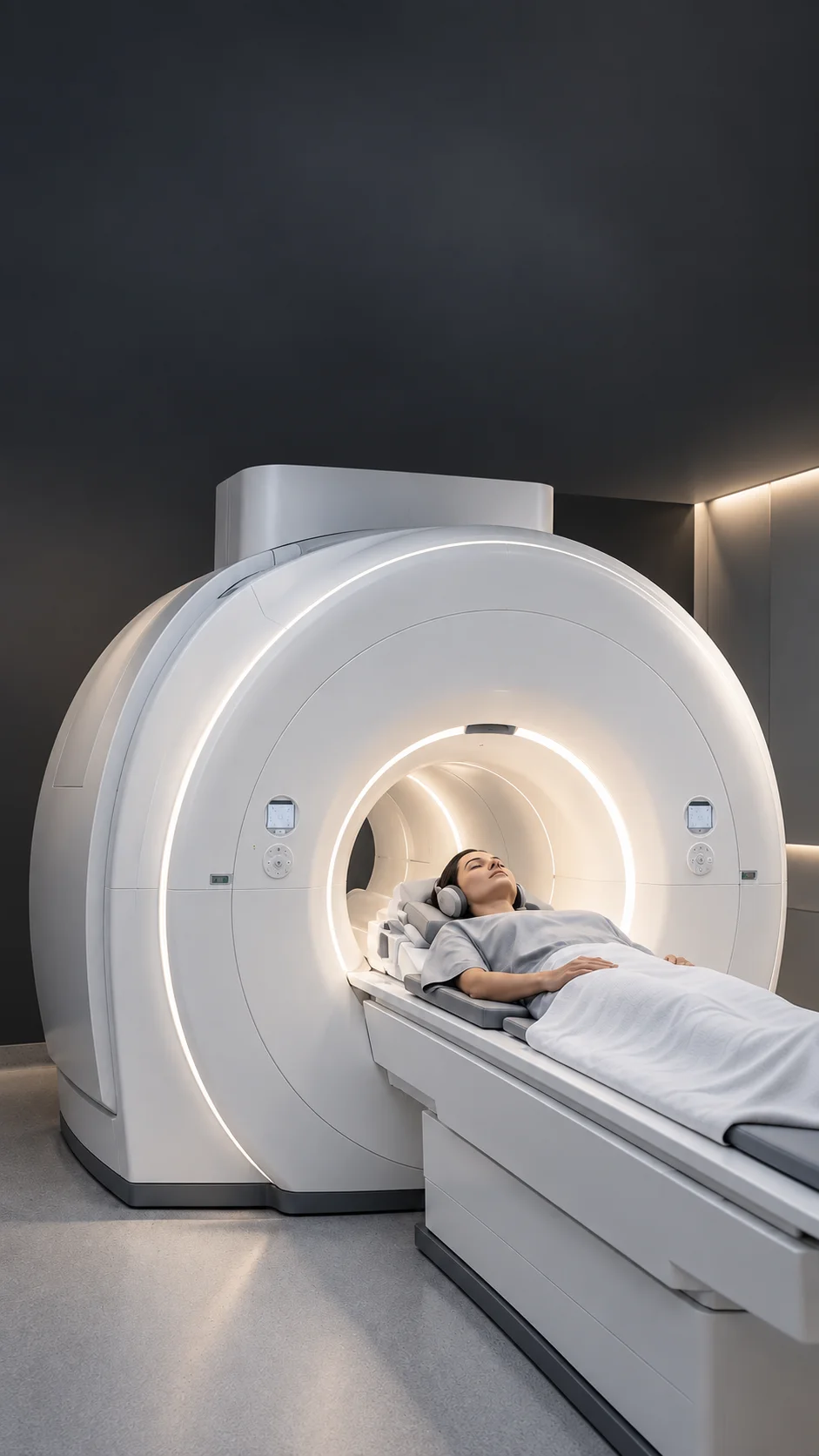
Magnetic resonance imaging showing discs, nerves and soft tissues in detail, without radiation.
What it is
Healthy discs appear bright and tall; worn discs darken, flatten or bulge. The scan shows exactly which levels are degenerated.
Herniated material or narrowed exits pressing on a nerve root are visible — and can be matched to your pain pattern.
Narrowing of the spinal canal and any signal change within the cord itself, which carries very different weight from simple wear.
Inflammation, infection, tumours and post-surgical changes each leave recognisable signatures a specialist reads in context.
Common questions
Imaging and symptoms often disagree. Many painless spines show degeneration, and real nerve pain can come from changes a scan underplays. That is why the scan is always read against your examination.
Tell the team beforehand. There are ways to make the scan manageable, and the referral can be planned accordingly — never suffer through in silence.
These need checking before any MRI. Bring implant cards and a full device history so safety can be confirmed in advance.
Only when the question requires it — for example infection, tumour or post-surgical assessment. Kidney function and allergies are checked first.
Free · No obligation · Reviewed by the ProSpine team