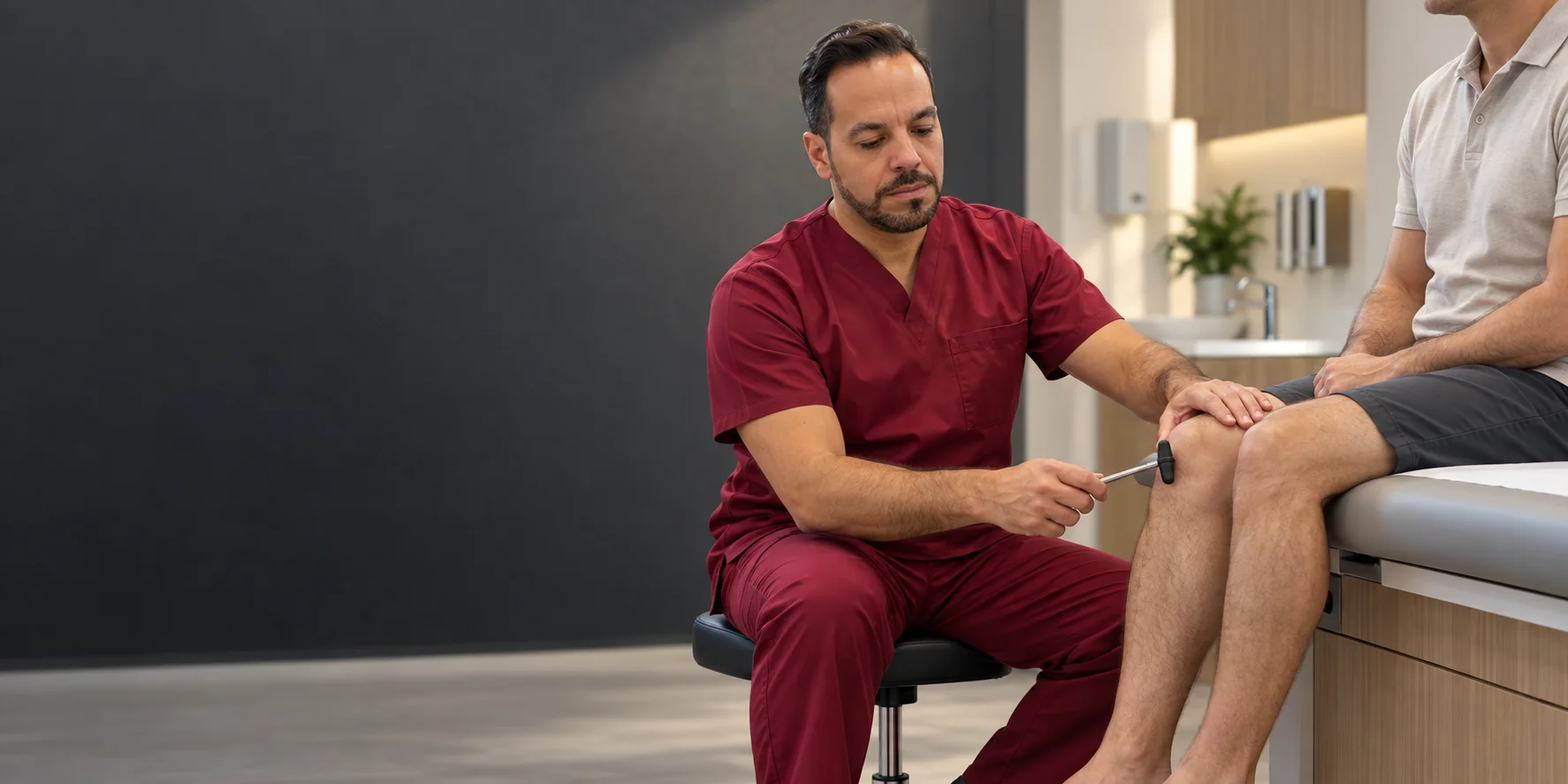
Strength and reflexes
Testing individual muscles and tendon reflexes shows whether a nerve is conducting normally — and how severely it is affected.
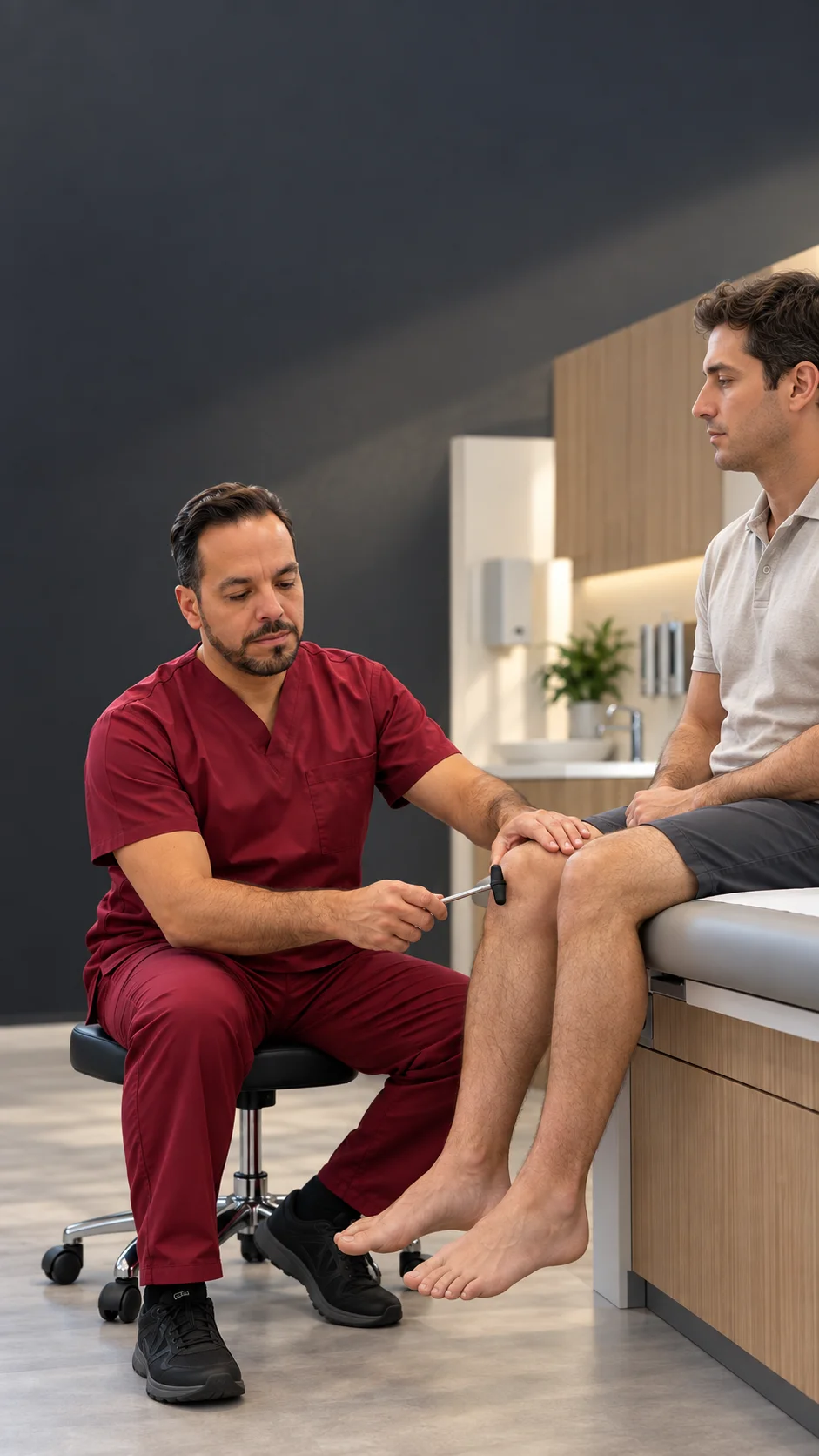
Diagnostics · Standard
A hands-on clinical assessment of nerves, reflexes, strength and movement — usually the first step before any imaging.
What it is
Testing individual muscles and tendon reflexes shows whether a nerve is conducting normally — and how severely it is affected.
Light touch and pinprick testing across the skin reveals which nerve territory is involved, since each spinal nerve supplies a defined patch of skin.
Gentle manoeuvres such as the straight-leg raise stretch irritated nerve roots. Reproducing your radiating pain this way points strongly to its source.
How you walk, stand and bend shows balance, coordination and guarding — information no scan can provide on its own.
Common questions
No. It uses gentle movements, light touch and tendon taps. If any manoeuvre reproduces your pain, say so — that response is itself useful information.
Spinal nerves travel into the limbs, so weakness, numbness or reflex changes in an arm or leg often locate the exact spinal level at fault.
A list of your current medications and any imaging or reports you already have. Wear clothing that lets the examiner see your spine move.
That is useful too — it steers the assessment toward imaging or other causes rather than a pinched nerve, and the team explains what comes next.
Free · No obligation · Reviewed by the ProSpine team