Alignment and curves
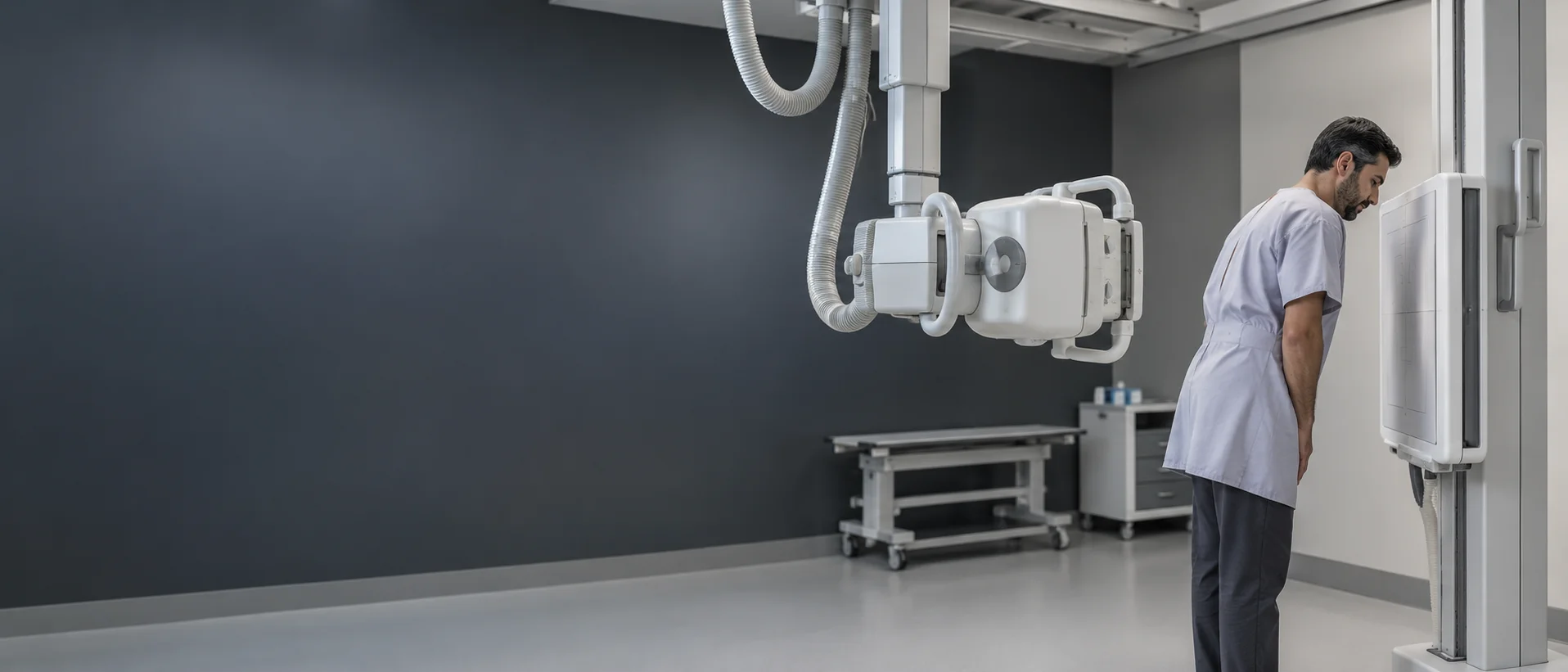
The side view shows the natural curves of the neck and lower back, and whether they are preserved, straightened or reversed.
Diagnostics · Standard
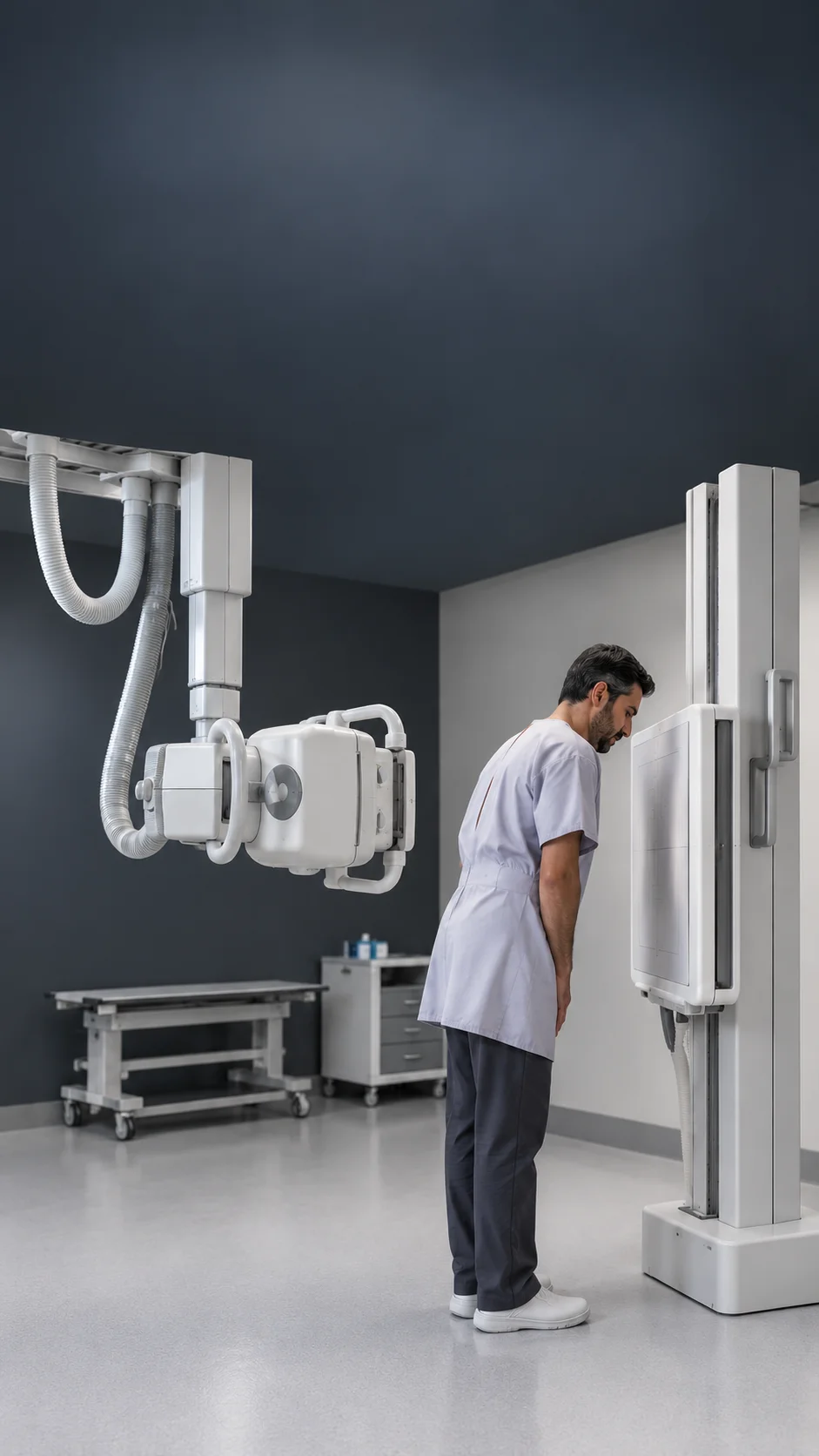
Plain X-ray images, including views taken while bending forward and backward, to assess alignment and stability.
What it is
The side view shows the natural curves of the neck and lower back, and whether they are preserved, straightened or reversed.
Narrowed gaps between vertebrae suggest worn discs; comparing levels shows which segments are most affected.
Bony outgrowths around discs and facet joints mark chronic degeneration and possible nerve exit narrowing.
Bending forward and backward reveals movement between vertebrae that is invisible on still images — the key sign of instability.
Common questions
Some spines look stable when still but shift when loaded. Flexion and extension views expose that movement, which decides between treatments that preserve motion and those that stabilise.
A spinal X-ray uses a low dose of radiation, and precautions such as shielding are routine. Tell the team if you are or may be pregnant, so the plan can be adjusted.
X-rays show bone, not discs or nerves in detail. A normal X-ray with ongoing nerve symptoms is a common reason to order an MRI next.
Usually no preparation is needed. You may be asked to remove metal objects and jewellery from the imaged area.
Free · No obligation · Reviewed by the ProSpine team